
Process Oriented Artistry
Inspired by the Artist Way, it's discovered that being process versus result oriented is the solution to a lot of artist's resistance and struggle with creation.

In a culture that is so obsessed with perfection in beauty, expression, timing, and results — where is the space to be messy? Where is the honor and worship for the draft, the steps you take along the way to get where you’re going? Where is the awkward growth spurts of puberty, the purity of inexperience and shameless skill to taste gaps? Must everything be so hyper-filterized and over edited to be worthy of our grace and compassion? Can we not be kids with scrawling lines and twisted handwriting? How can we ever make a move forward if we are paralyzed with the fear of our own inadequacy at harnessing the muses of perfection?
There may be a solution, but the world is asleep or forgetful, perhaps even ungrateful to the gift that is the artistic process.
Process oriented artistry may be the solution to this cultural tragedy, but it does not seem to be a popular one.
Have you ever been stuck at a blank canvas or notebook, consumed by the crawling realization that your mind is completely blank of ideas and direction? You can’t tell what’s next and you’re too scared to find out by making any decision for fear of falling over the metaphorical cliff. This is the point of no return. The point where as artists we are challenged, no, imbued with the responsibility of veering off courageously into the uncharted jungles of our collective creative consciousness. You feel the call in your body, the heavy pull in your heart, but your hands and mostly your brain are deferring to the fear of the unknown. This is a human experience and consequently the beginning of the artistic process.
The first step to befriending the process is seeing it as separate from yourself. Completely depersonalizing and detaching the process from your silly and self-centered narrative. The process has nothing to do with you just as gravity or the deep sea functions without our proper understanding of its mysteries. The process isn’t something that you overcome with domination or shame, it is something that you allow to channel through you as an offering to the powers beyond human comprehension and ego. The process is the gut instinct to paint the first stroke, blurt the first lines, and make the first bold move.
Unfortunately, there is a lot of resistance in our dominate culture to understand the process as the super natural power that it is. Like the intelligence of trees, migrating whales, or hard working mycelium, the process is just one of the many ways the Universe communicates it’s existence to us. It is the Universe’s way of letting us in on the secret of everything that has ever happened and is set to happen. Yet, we scoff at its majesty and devalue its role in our functions.
Process Oriented Artistry seeks to rehabilitate this relationship between humans and the Universal Creative Consciousness. Process Oriented Artistry prioritizes the process of creation just as much and even more than the result of that creation. This healing is a lot more simple than we think, yet it is our mistrust and arrogance that must first be melted like warm oil on hot skin.
There are a few things to consider if you are searching for a relationship with the process, which can be a personal and communal relationship, but the tenets are the same regardless of how big the crowd.
Tenets of Process Oriented Artistry:
Plan less, do more.
School has taught us to do one, two, and even three drafts before a final draft. This is for good reason. When we are creating something, we want to make sure we are presenting exactly what we mean to present and this shows care and intention. I’m all for planning and brainstorming and ideating on a good roll of inspiration, but there is always the risk of falling into analysis paralysis if artist stick around too long in the planning stage. The planning stage can transform into a crutch, an excuse as to why nothing has really been done. As artist, we risk offending the muses of creation when they dawn on us and we act like we are going to follow their guidance yet we keep it all in our heads like unattainable fantasies. For some artist, it may not even be the issue that they are experiencing doubt and insecurity about foraging ahead, the issue may be lack of resources of support. Many artists cannot afford editors and curators and rely on the graces of friends with reasonable taste who may or may not be well versed enough in that craft to provide suitable revisions. Don’t let this stop you. Do your best on it, whatever your best may look like in that moment and post that piece anyway. I am of the opinion that nothing is truly ever complete or even a masterpiece, nothing is above improvement after the fact, so plan less and do more! Stop stifling your desires with the excuse of it’s not ready and put it out there, move on, and find the next piece of inspiration.
Artists are scientist, experiment like one.
Experimenting goes along nicely with the sentiment of planning less and doing more because experimenting is based on hypothesis. Scientist start with an educated guess based on humans’ capacity to assume and perceive within our boundaries. An experiment is something that is acted upon, we make the moves to see what will happen like pushing a domino and causing a whole symphony of effects one after the other. The plan (also known as the Scientific Method) is a brief and instant part in the process of discovery, not the entirety of it. A plan should really only take a few minutes to materialize. As we know, human consciousness is not the only spectrum of experiencing the world, so no amount of planning will tell how an experiment will manifest itself. Humans like to think that we have a lot of control over anything and everything around us. We try to impose and force that control with our minds and brute force and more often than not, it backfires on us. Experimenting releases that complex and indicates that we trust the Universe to co-create with us in our discovery of all that is possible, however, this can’t be done if we are stuck hyperfixating on the most perfect way of approaching something. Sometimes you just have to give it up because the sooner you try something new or different or unexpected, the sooner you can obtain the information you need and you can pivot or improve.
Suspend judgement and expectations.
One of the most unfavorable qualities humans have is the ability and compulsion to be overly judgmental. Don’t get me wrong, having discernment is part of judgment and we need that to keep ourselves safe and aware of our living experience and environment, however judgment is so misappropriated in our culture. People judge over the most simplest and natural of things, in turn become their own and each others enemy over it. In order to respect a process oriented path of artistry, creators and artists alike need to be cognizant of their automatic nature to nitpick. Harsh judgment scares your brain into thinking that any move you make could be a detrimental mistake, that one wrong photo can ruin your reputation or a flop article will somehow prove you were an impostor all along. Excessive judgment fosters doubt and doubt is not a friend of creation. Does the flower doubt itself in bloom? Or the caterpillar to hatch into a bold butterfly? Not at all, and like the rest of nature, as humans are, we must allow ourselves the grace to be moved by the magic of creation, not over intellectualize or criticize or manipulate or circumvent. Sooner or later what you have to share with the world will come out, so you might as well stand on ten toes about it and deal with the consequence as they come. Not everything is in your control. The only thing in your control is how true you are to yourself and to the world.
Document the journey.
My favorite thing about being a process oriented artist is documenting the journey. Documenting the journey can be as basic as setting up a camera and filming yourself paint untidily for the IG stories or scanning your drafted smudged drawings and posting it on your blog or saving your flop manuscripts and sharing them in you writing club. It is so important as artist that we release this obsession with the final results that we see in galleries and museums and recognize that art is not only valid when it is being cooed and awed over in front of a seemingly overly sophisticated crowd or receiving thousand of hearts on Substack or Instagram. In actuality, artist spend so much more energy and time ingrained in the process of creating than they do in the final result of it. The final result doesn’t take much energy from the artist, usually at that point it is in the hands of the audience or the artist’s team to get the piece to it’s next step which is integration into the Universal Creative Consciousness. Documenting the journey is your relationship with your art, it is intimate, special, and filled with beautiful emotions and epiphanies. Enjoy your process while you have it because there will come a time in the end where the art will no longer be solely yours, but that of the collectives and you will have no choice, but to share that relationship with others. To document is also to give yourself more material to be inspired by and to improve from. Artists are scientist because they must experiment, but artists are also teachers because they must study and instruct themselves and to do so you need your curriculum which is your process. You will thank yourself for saving your color theory swatches and awkward journal entries.
Share it scared and express exactly as you are.
Probably the hardest point on this list is to share it scared and express exactly as you are for two reasons: sharing anything that is personal and vulnerable is scary, and expression, which can range from big and heavy to distant and elusive feelings, is an unpredictable way to live. I won’t lie and say that following this tenet will always bring you bountiful results every time. Sometimes it will bring you the opposite. You will take a risk by exposing your raw self and people may not understand it, reject it, even scorn it. Don’t be disheartened by the potential of being unpopular. There were many true artist known now who historically were unpopular during their time, and it is important to get straight with yourself about what you value as an artist. Do you value being popular or do you value being true? Sometimes both experiences will align and cross at the right time right place and you can enjoy the fruits of that blessing, and many times it’ll be like oil and balsamic vinegar, impossible to mix, but still tasty on some sourdough bread. This is how we should approach expression. Humans are blessed with the ability to express themselves in a variety of ways and it would be a shame to not explore the range and dynamism of that ability. Similarly to the first point, the more you practice, the less you repress, the sooner you can unravel the sweet spot of what exactly you mean and it takes that process to get to where you need. Remember that repression is physically not good for the body. There are studies that share that repression can have extreme physiological and psychological effects on the body, so think of expressing yourself as following doctor’s orders. While you can’t control how someone responds to you (and we shouldn’t strive for that), you can control how much freedom you allow your soul and heart to experience. Liberate yourself from the fear and ascend to your birthright as the maker of your world and keeper of creativity.
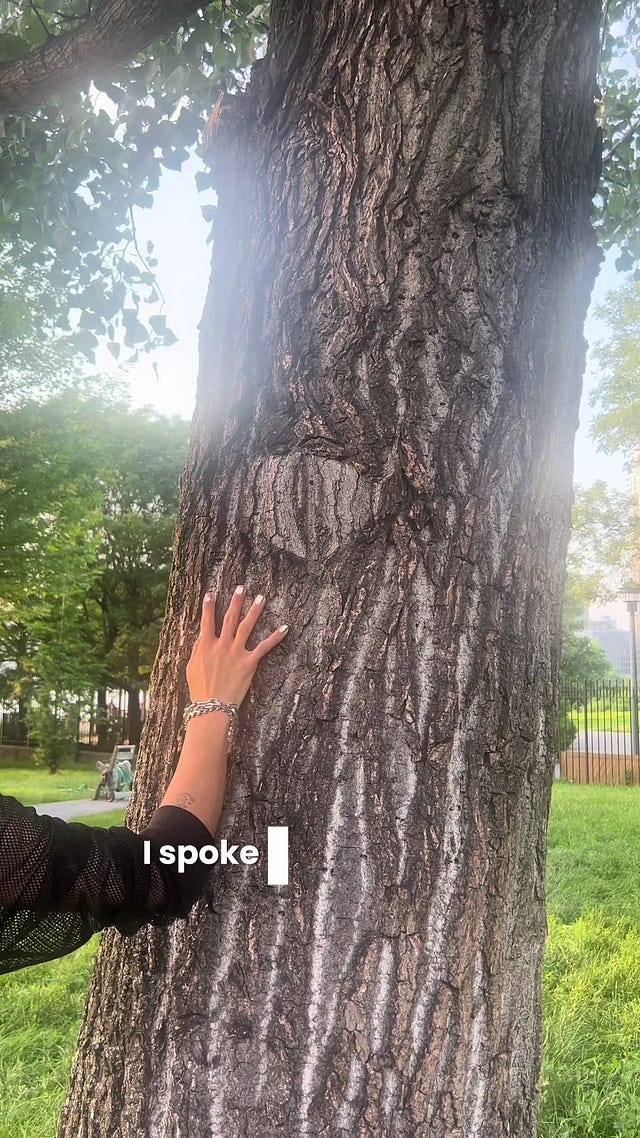
 Tiktok failed to load.
Enable 3rd party cookies or use another browser